

Post Operative Instructions
Wisdom Tooth Surgery
One Week Post-op Instructions
Irrigating Wisdom Teeth Sockets should be started one week after your surgery day
- The syringe is to be used on lower extraction areas ONLY.
- Fill the syringe with warm tap water, then insert the curved tip down into the extraction hole and push the liquid out of the syringe slowly. At least, one full syringe should be used in each lower extraction area. You may need to flush the area a couple of times until you no longer see debris. It is normal to see bleeding after flushing the area and it will stop after a couple of seconds. It is very important to make sure that the tip goes into the extraction socket when you flush the site. If the tip is only on the surface of the gum tissue then the food and debris will not be flushed out.
- The syringe should be the last thing you do before bedtime. If you feel the need to flush the area more, than it can be done after each meal. Use syringe until you can no longer fit the syringe into the extraction area. Everyone is different when it comes to healing time for the extraction sockets. You may have holes in the lower extraction sites for longer than a month.
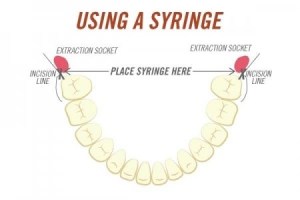
- Gravity will help the upper sockets to not trap food so no irrigation is necessary for upper extractions
- You may discontinue salt water rinses at the one week mark
- You may advance your diet at your discretion as dictated by comfort
- Normal exercise may be resumed if comfortable
- Swelling should be decreasing by the end of the first week, if it is not or it returns in the weeks to come please contact the office immediately at 510.848.1055

Implant Placement Surgery
One Week Post-op Instructions
- You may begin to brush adjacent teeth when stitches are gone or when it feels comfortable
- You may discontinue salt water rinses at the one week mark
- You may advance your diet at your discretion as dictated by comfort
- Normal exercise may be resumed if comfortable
- Our office will call you to arrange an in office visit in 3 to 4months. This visit is to evaluate the healing of the implant and must be done before your dentist can make the crown.
- Swelling should be decreasing by the end of the first week, if it is not or it returns in the weeks to come please contact the office immediately.
General Extraction and Bone Graft Surgery
One Week Post-op Instructions
- You may discontinue salt water rinses at the one week mark
- You may begin to brush adjacent teeth when stitches are gone or when it feels comfortable
- You may advance your diet at your discretion as dictated by comfort
- Normal exercise may be resumed if comfortable
- Swelling should be decreasing by the end of the first week, if it is not or it returns in the weeks to come please contact the office immediately.